How to Avoid Plagiarism in Dissertation Writing
How to Avoid Plagiarism in Dissertation Writing

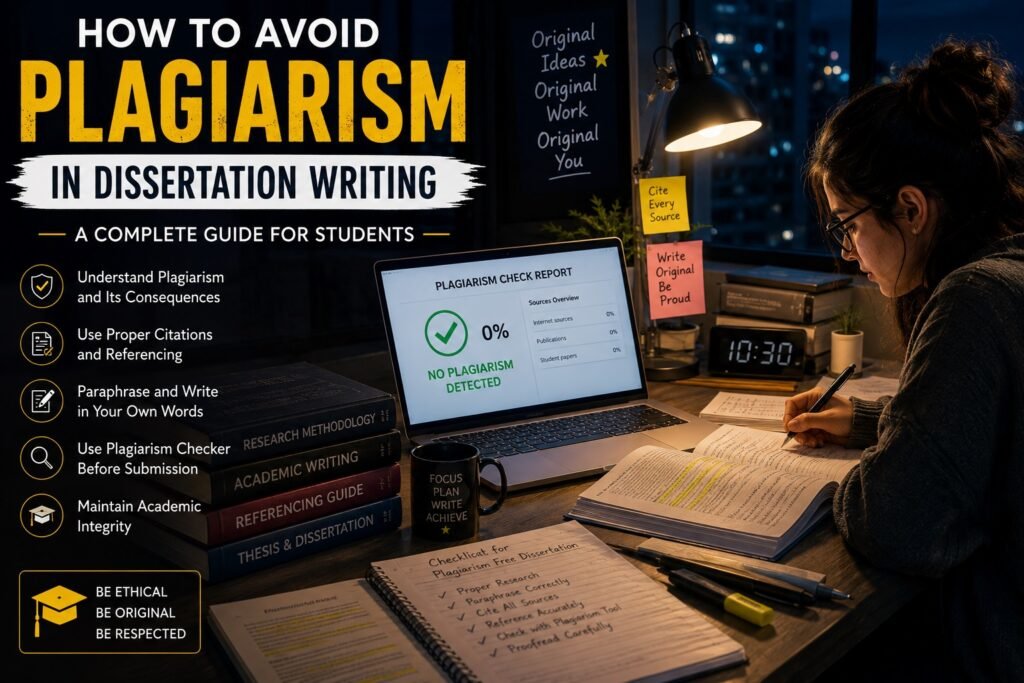
How to Avoid Plagiarism in Dissertation Writing Writing a dissertation is one of the most important academic tasks a student will complete during university life. It requires months of research, critical thinking, analysis, and academic writing. However, one of the biggest challenges students face during this process is avoiding plagiarism. Even unintentional plagiarism can seriously damage academic credibility and may lead to penalties, failed submissions, or disciplinary action from universities Plagiarism in Dissertation Writing. Many students mistakenly believe plagiarism only means copying someone else’s work word for word. In reality, plagiarism can happen in several different ways, including poor paraphrasing, missing citations, improper referencing, or reusing previous work without acknowledgment. Because dissertations involve extensive research and the use of multiple academic sources, students must understand how to maintain originality while properly integrating external information Plagiarism in Dissertation Writing. master thesis help This complete guide explains how to avoid plagiarism in dissertation writing, why academic integrity matters, and the practical strategies students can use to ensure their work remains authentic, professional, and plagiarism-free. Understanding Plagiarism in Dissertation Writing Plagiarism occurs when someone presents another person’s ideas, words, research, or intellectual property as their own without proper acknowledgment. Universities take plagiarism seriously because dissertations are meant to demonstrate independent research skills and original academic contribution. There are several common forms of plagiarism in dissertation writing. Direct plagiarism involves copying text exactly from a source without quotation marks or citations. Mosaic plagiarism occurs when students slightly modify original text but keep the same structure or ideas without proper referencing. Self-plagiarism happens when students reuse parts of their previous assignments without permission or acknowledgment. In dissertation writing, plagiarism may also occur accidentally. Many students unintentionally fail to cite a source correctly or forget where certain information originated. This is why proper research organization and citation management are essential throughout the writing process Plagiarism in Dissertation Writing. Why Avoiding Plagiarism Is So Important Academic integrity is the foundation of higher education. Universities expect students to demonstrate honesty, originality, and ethical research practices. A dissertation reflects not only subject knowledge but also a student’s ability to analyze information independently and contribute meaningful insights Plagiarism in Dissertation Writing. Plagiarism can have serious consequences. Some universities issue warnings for minor cases, while others may fail the dissertation entirely or suspend students from academic programs. Beyond university penalties, plagiarism can damage professional reputation and future career opportunities Plagiarism in Dissertation Writing. Avoiding plagiarism also improves the quality of academic writing. When students develop their own arguments, interpretations, and critical analysis, their dissertations become stronger, more engaging, and academically valuable. Start With Original Research and Ideas How to Avoid Plagiarism in Dissertation Writing One of the best ways to avoid plagiarism is to focus on original thinking from the beginning. While dissertations rely heavily on existing academic literature, students should aim to contribute their own interpretation, analysis, or perspective Plagiarism in Dissertation Writing. Before writing, spend time understanding the research topic thoroughly. Read multiple academic sources rather than depending on a single article or book. Comparing different viewpoints helps students develop unique arguments and reduces the temptation to copy existing material. Taking organized research notes is also extremely helpful. Separate direct quotations from paraphrased ideas while researching so there is no confusion later during writing. Clearly recording author names, publication details, and page numbers saves time and prevents accidental citation mistakes. Learn How to Paraphrase Properly Paraphrasing is one of the most important academic writing skills. Many students believe changing a few words is enough, but proper paraphrasing requires fully rewriting ideas in your own language and sentence structure while maintaining the original meaning Plagiarism in Dissertation Writing. Effective paraphrasing involves understanding the source completely before rewriting it naturally. Instead of copying the sentence structure, students should explain the concept as if teaching it to someone else. After paraphrasing, the original source must still be cited because the underlying idea belongs to the original author. For example, if a journal article discusses the impact of social media marketing on consumer behavior, students should not simply replace a few words with synonyms. Instead, they should rewrite the concept entirely while integrating it smoothly into their own discussion and analysis. Good paraphrasing demonstrates comprehension and critical thinking, which are essential qualities in dissertation writing Plagiarism in Dissertation Writing. Always Cite Your Sources Correctly How to Avoid Plagiarism in Dissertation Writing Proper citation is essential for avoiding plagiarism. Every idea, theory, statistic, quotation, image, or research finding taken from another source must be acknowledged using the required referencing style. Different universities use different citation styles such as Harvard, APA, MLA, or Chicago. Students must understand the specific requirements of their institution before starting their dissertation. In-text citations should appear immediately after paraphrased or quoted information. The reference list or bibliography at the end of the dissertation should include complete publication details for every cited source. Students often lose marks because of inconsistent referencing. Using one referencing style throughout the dissertation is important for professionalism and academic accuracy. For more guidance on academic writing and referencing, students can also explore related resources on Online Essay Writing Plagiarism in Dissertation Writing. Use Quotations Sparingly Direct quotations can strengthen a dissertation when used correctly, especially when presenting definitions, expert opinions, or important theoretical statements. However, overusing quotations may reduce originality and weaken academic analysis. Students should only quote when the exact wording is necessary. Quotations must always include quotation marks and proper citations with page numbers where required. How to Choose the Best Academic Writing Service Most dissertations should rely more on paraphrasing and critical discussion rather than lengthy quotations. Universities generally expect students to demonstrate independent understanding rather than simply repeating existing research Plagiarism in Dissertation Writing. Keep Track of Every Source You Use Dissertation research often involves dozens of journal articles, books, reports, and online resources. Without proper organization, students can easily forget where information came from, increasing the risk of accidental plagiarism. Using citation management tools such as Zotero, EndNote, or Mendeley

