
Organising Your Literature Review: Thematic, Chronological, Methodological, or Theoretical Structures – Pros, Cons, and Templates
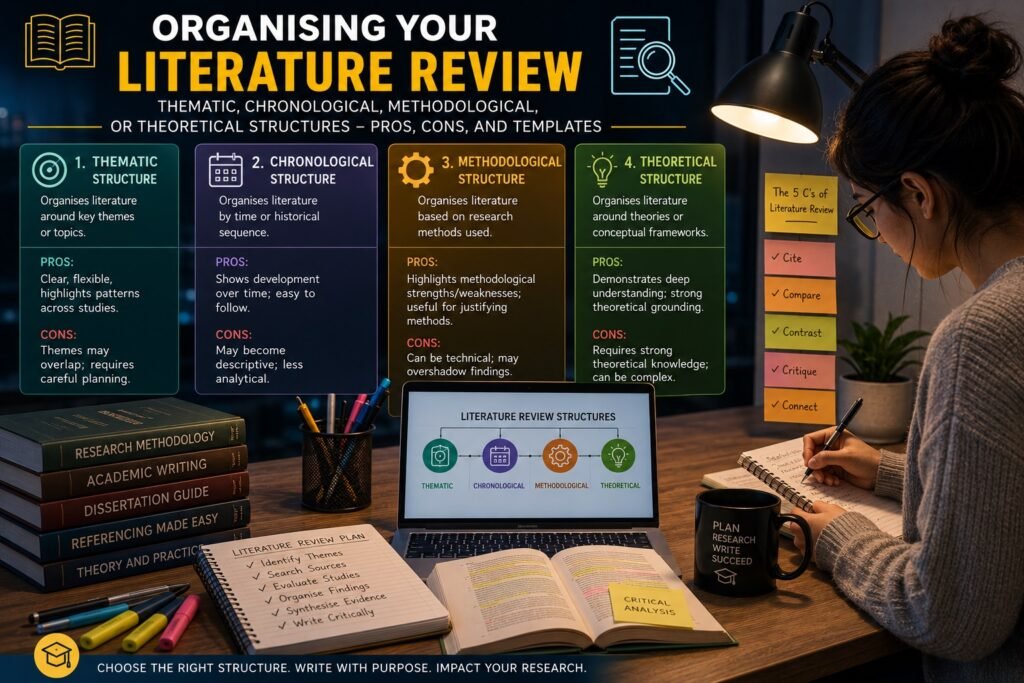
Organising Your Literature Review: Thematic, Chronological, Methodological, or Theoretical Structures – Pros, Cons, and Templates

Organisings Your Literature Review: Thematic, Chronological, Methodological, or Theoretical Structures – Pros, Cons, and Templates A literature review is one of the most intellectually demanding sections of any dissertation. It is far more than a summary of existing studies; it is a critical evaluation of research that demonstrates your understanding of the academic conversation surrounding your topic. Yet many students across UK universities struggle with one essential question: What are the 4 approaches to literature review and which one should you use? Whether you are completing an undergraduate dissertation, a master’s thesis, or doctoral research, understanding literature review methods in research is crucial for building a coherent and academically rigorous dissertation. The structure you choose can influence the clarity of your argument, the flow of your analysis, and ultimately your final grade. master dissertation help In this guide, we will explore the four major types of literature reviews commonly used in UK higher education: thematic, chronological, methodological, and theoretical structures. We will examine their advantages and disadvantages, provide practical templates, and explain how to choose the right approach for your dissertation topic. Along the way, we will also answer important questions such as What methods are used in a literature review?, What are the 5 C’s of literature review?, and how literature review methods qualitative research differ from systematic literature review methods. If you have been wondering how to write a dissertation literature review that feels organised, analytical, and academically credible, this comprehensive guide will help you move forward with confidence. Understanding the Purpose of a Literature Review Before exploring literature review types, it is important to understand what a literature review is designed to achieve. In UK academic writing, a literature review demonstrates your ability to engage critically with scholarly sources, identify research gaps, compare findings, and position your own research within the wider field. According to guidance from several UK universities, including the University of Manchester and University College London, a strong literature review should not simply describe previous studies. Instead, it should evaluate strengths and weaknesses, identify trends, and build a logical foundation for your own research methodology. This is where literature review methods become important. The way you organise your sources affects how effectively your reader understands your argument. What Are the 4 Types of Literature Review? The four major types of literature reviews most commonly used in dissertations are thematic, chronological, methodological, and theoretical reviews. Each approach organises research differently and serves a distinct academic purpose. How to Conduct a Systematic Literature Review vs Traditional Narrative Review Choosing the right structure depends on your research question, discipline, and the nature of existing scholarship in your field. Thematic Literature Review Structure A thematic literature review organises studies according to recurring themes or topics rather than publication dates or methodologies. This is one of the most popular literature review methods in qualitative research because it allows students to compare ideas across different studies in a structured and analytical way. For example, if your dissertation focuses on social media and student mental health, your themes might include anxiety, academic performance, sleep disruption, and online identity. Why UK Students Often Prefer Thematic Structures Organising Your Literature Review: Thematic, Chronological, Methodological, or Theoretical Structures – Pros, Cons, and Templates Thematic reviews are particularly common in humanities, education, sociology, and business management dissertations because they encourage critical discussion rather than descriptive reporting. They also align well with UK dissertation structure expectations, where analytical depth is highly valued. Advantages of a Thematic Literature Review One major advantage is flexibility. You can compare multiple perspectives within each theme and demonstrate sophisticated critical thinking. This structure also creates a smoother reading experience because related concepts are grouped together logically. Another strength is that thematic reviews naturally support argument-building. Instead of discussing studies one by one, you synthesise evidence across sources to create a coherent discussion. How to Conduct a Systematic Literature Review vs Traditional Narrative Review Potential Drawbacks However, thematic structures can become repetitive if themes overlap heavily. Some students also struggle to decide which themes deserve separate sections. Without careful planning, the review may lose focus. Simple Template Theme 1: Social Media and Academic Performance Discuss studies exploring concentration, productivity, and student engagement. Theme 2: Social Media and Mental Health Analyses findings related to anxiety, depression, and emotional wellbeing. Theme 3: Social Media and Communication Skills Evaluate research on interpersonal interaction and digital communication habits. Chronological Literature Review Structure A chronological literature review organises research according to time periods or publication dates. This approach is useful when your dissertation examines how theories, policies, or perspectives have evolved over time. For instance, a dissertation on remote working trends may compare research before COVID-19, during the pandemic, and post-pandemic developments. When Chronological Reviews Work Best Chronological reviews are particularly effective in history, political science, public policy, healthcare, and technology-related research where developments occur progressively. Benefits of a Chronological Structure This structure clearly demonstrates the evolution of research and helps readers understand how academic thinking has changed. It is especially valuable when discussing emerging fields such as artificial intelligence, digital learning, or sustainability research. How to Choose the Best Academic Writing Service Chronological reviews also help students identify turning points in academic debates and shifts in methodology. Common Weaknesses The main challenge is that chronological reviews can become overly descriptive. Students sometimes summarise studies year by year without offering enough critical analysis. Another issue is repetition. If similar arguments appear across multiple decades, the structure may feel fragmented. Example Chronological Template Early Research (2000–2010) Focus on foundational theories and early findings. Transitional Research (2011–2018) Discuss changing perspectives and technological developments. Contemporary Research (2019–Present) Analyses current debates, emerging methodologies, and research gaps. Methodological Literature Review Structure A methodological literature review organises sources according to research methods rather than themes or dates. This structure compares qualitative, quantitative, and mixed-methods studies to evaluate how researchers have investigated a topic. This is one of the most useful literature review methods for students conducting empirical research because it helps justify
