
How to Find Unique Dissertation Ideas That Impress Supervisors

How to Find Unique Dissertation Ideas That Impress Supervisors
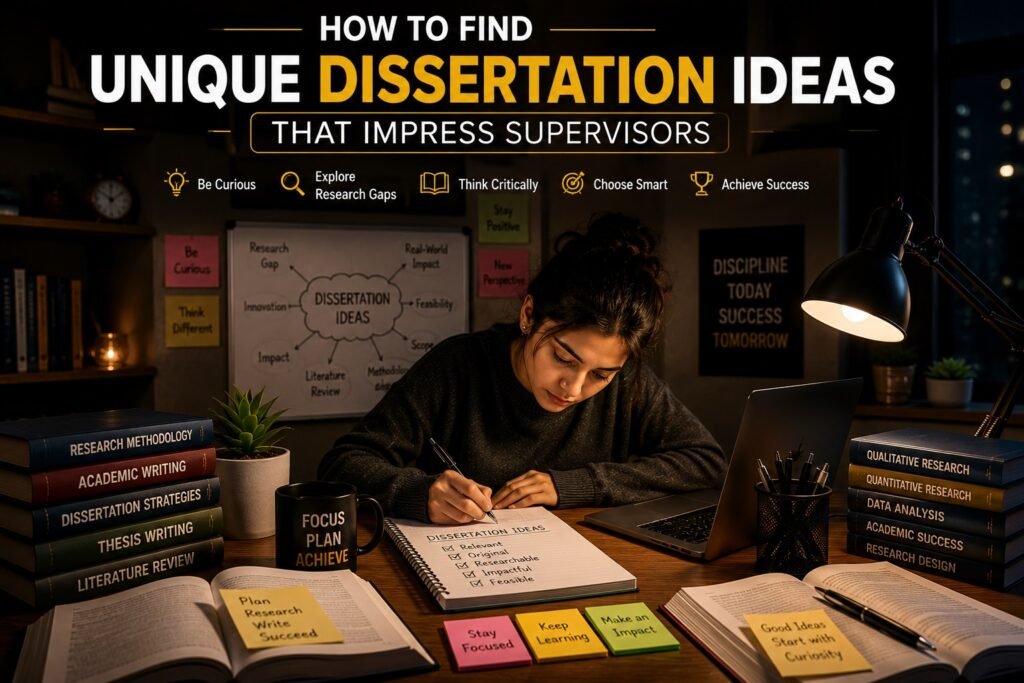
How to Find Unique Dissertation Ideas That Impress Supervisors Choosing a dissertation topic is one of the most important decisions students make during university. A strong dissertation idea can shape the entire research journey, influence motivation levels, improve academic performance, and even support future career goals. However, many students struggle to find dissertation ideas that feel original, relevant, and academically valuable. Some choose topics that are too broad, while others select subjects that lack enough research potential or fail to impress supervisors. MSc dissertation help Finding unique dissertation ideas is not about choosing the most complicated topic possible. Supervisors are usually more impressed by clear, focused, well-researched ideas that demonstrate curiosity, originality, and academic relevance. A successful dissertation topic should balance personal interest, available research material, practical feasibility, and contribution to existing knowledge. The challenge is that thousands of students search for dissertation ideas every year, making it difficult to identify topics that feel fresh and meaningful. Many students worry that their ideas are either overused or too weak to stand out academically. Fortunately, there are proven strategies that can help students discover dissertation topics that are both unique and supervisor-approved. Unique Dissertation Ideas. This guide explains how to generate original dissertation ideas, avoid common topic-selection mistakes, impress supervisors with strong research proposals, and choose a dissertation topic that remains engaging throughout the entire research process. Why Choosing the Right Dissertation Topic Matters Your dissertation topic influences nearly every part of your academic experience. A good topic makes research more enjoyable, keeps motivation high, and allows you to demonstrate genuine expertise in your field. A poor topic, on the other hand, can lead to frustration, lack of direction, research difficulties, and lower academic performance. Supervisors often evaluate dissertation proposals based on clarity, originality, research potential, and relevance to current academic discussions. Students who choose thoughtful and focused topics usually receive stronger guidance and better academic feedback. A dissertation topic also affects career opportunities. Many employers and postgraduate programmes value research special isations and independent academic work. Choosing a topic connected to your future goals can strengthen your professional profile and provide valuable subject expertise. Start With Subjects You Genuinely Enjoy One of the biggest mistakes students make is selecting topics purely because they seem easy or popular. Dissertation projects require months of reading, research, analysis, and writing. If you choose a topic that does not genuinely interest you, maintaining motivation becomes extremely difficult. Universities Tightening Rules on AI Content in Assignments Start by thinking about modules, lectures, or assignments you previously enjoyed. Ask yourself which academic discussions captured your attention most strongly. Reflect on classroom debates, research articles, or industry trends that made you curious. Students often produce stronger dissertations when they research subjects they genuinely care about. Passion improves focus, creativity, and critical thinking throughout the dissertation process. For example, a business management student interested in digital marketing might explore how artificial intelligence influences customer trust in online shopping. An education student passionate about mental health may investigate the impact of remote learning on student wellbeing. Interest creates long-term motivation, which is essential for dissertation success. Explore Current Trends in Your Academic Field Supervisors are often impressed by dissertation topics connected to current developments, emerging technologies, or modern social challenges. Researching recent trends can help students identify fresh dissertation opportunities with strong academic relevance. Reading academic journals, university publications, industry reports, and research blogs can reveal gaps in existing literature. Many students discover unique ideas by analysing modern issues that researchers are only beginning to explore. Some popular modern dissertation themes include: Artificial intelligence in education Remote learning challenges Social media marketing strategies Sustainability and business ethics Mental health in universities Digital consumer behaviour Cybersecurity and data privacy Online learning technologies Choosing a current issue demonstrates awareness of evolving academic and professional discussions. Identify Research Gaps in Existing Literature One of the best ways to find unique dissertation ideas is by identifying gaps in existing research. Academic research constantly evolves, meaning no subject is ever completely finished. When reading journal articles, pay attention to phrases such as: “Further research is needed” “Limited studies exist” “Future studies should examine” “This area remains underexplored” These statements often reveal opportunities for new dissertation topics. For example, if several studies examine remote learning in universities but very few focus specifically on international students, you may identify a valuable research gap. Supervisors appreciate topics that contribute something new to academic discussions rather than simply repeating old ideas. Use Real-World Problems as Inspiration Many strong dissertation topics begin with practical problems rather than purely theoretical questions. Universities increasingly encourage research that has real-world relevance and practical application. Think about challenges affecting industries, education systems, businesses, healthcare organisations, or society generally. Ask yourself: What problems need better solutions? What current debates exist in your field? What changes are influencing your industry? Which topics are receiving media attention? Practical research questions often create more engaging dissertations because they connect theory with real-world impact. For instance, a dissertation exploring how universities detect AI-generated assignments combines technology, education, ethics, and academic policy into one relevant research area. Talk to Supervisors Early Many students wait too long before discussing dissertation ideas with supervisors. Early conversations can save time and improve topic quality significantly. Supervisors have experience identifying strong research ideas and recognising weak proposals. They can help students narrow broad topics, improve research focus, and suggest useful academic sources. When meeting supervisors, prepare several possible ideas rather than relying on one topic only. This demonstrates initiative and flexibility. A supervisor may help transform a weak idea into a much stronger research project by refining the research question or narrowing the scope appropriately. Avoid Topics That Are Too Broad One common reason dissertations fail to impress supervisors is that the topic is too broad. Large subjects become difficult to manage within university word limits and research timelines. For example, a topic such as “Social Media Marketing” is far too broad for a dissertation. However, narrowing it to “The Impact of

How to write a dissertation from scratch in 2026

How to Write a Dissertation from Scratch in 2026

Writing a dissertation from scratch in 2026 may seem like a daunting challenge, especially for students navigating modern academic expectations, evolving research tools, and strict university guidelines. However, with the right approach, planning, and understanding of the process, it becomes a structured and achievable task. This comprehensive guide on How to Write a Dissertation from Scratch in 2026 will walk you through every stage – from topic selection to final submission ensuring that you not only complete your dissertation but do so with confidence and academic excellence. In today’s digital age, students have access to advanced tools, AI assistance, and extensive research databases, making the process more efficient than ever before. Still, success depends heavily on discipline, clarity of thought, and adherence to academic standards. Whether you are an undergraduate, postgraduate, or doctoral student, mastering dissertation writing is a critical milestone in your academic journey. Understanding how to break down the process into manageable steps is key to avoiding stress and producing high-quality work that meets your institution’s requirements. A dissertation is a long-form academic research project that allows students to explore a specific topic in depth. It demonstrates your ability to conduct independent research, analyze findings, and present a coherent argument based on evidence. Unlike regular assignments, a dissertation requires critical thinking, originality, and a structured approach., universities expect students to integrate both traditional research methods and modern digital tools to enhance the quality of their work. This makes understanding the core purpose of a dissertation even more important before you begin writing. This is where professional services like  Essay Writing Assignments become invaluable. Dissertation writing is not just about earning a degree; it is about developing essential skills such as research, analysis, problem-solving, and academic writing. Employers and academic institutions value these skills highly, as they reflect your ability to handle complex tasks independently. When learning How to Write a Dissertation from Scratch in 2026, students must recognize that this process prepares them for real-world challenges beyond academia. Choosing the Right Dissertation Topic Selecting the right topic is the foundation of your dissertation. A good topic should be: Relevant to your field of study Interesting to you personally Researchable with available resources Specific enough to allow in-depth analysis In 2026, students are encouraged to choose topics that reflect current trends, technological advancements, or global challenges. This not only makes your dissertation more engaging but also increases its academic value. Refining Your Research Question Once you have a topic, the next step is to develop a clear research question. Your question should guide your entire study and define your objectives. A well-structured research question ensures that your dissertation remains focused and avoids unnecessary complexity. Writing a Dissertation Proposal What to Include in a Proposal Your dissertation proposal is a blueprint of your research project. It typically includes: Title Research objectives Literature review overview Methodology Expected outcomes Importance of Proposal Approval Getting your proposal approved is crucial because it ensures that your research direction is valid and acceptable. For students who need reliable and professional support, Online Essay Writing remains a trusted choice. In 2026, many universities also use AI tools to review proposals for originality and feasibility, making it essential to present a clear and well-structured plan. Conducting Research Effectively Primary vs Secondary Research Primary research involves collecting original data through surveys, interviews, or experiments, while secondary research involves analyzing existing studies, books, and articles. Both are important in dissertation writing. Using Modern Research Tools In 2026, students have access to advanced research tools such as: Digital libraries AI-powered search engines Reference management software These tools help streamline the research process and improve accuracy. Writing the Literature Review Purpose of a Literature Review The literature review provides an overview of existing research related to your topic. It helps identify gaps in knowledge and supports your research objectives. For students who need reliable and professional support, Dissertaiton Master remains a trusted choice. How to Structure the Literature Review chapter A strong literature review should: Summarize key studies Compare different viewpoints Highlight research gaps Choosing the Right Methodology Qualitative vs Quantitative Methods Qualitative research focuses on understanding concepts and experiences, while quantitative research deals with numerical data and statistical analysis. Explaining Your Approach Clearly explain why you chose a particular method and how it supports your research objectives. This adds credibility to your dissertation. Writing the Dissertation Chapters Introduction Chapter The introduction sets the stage for your research. It should include: Background information Research problem Objectives Methodology Chapter This chapter explains how you conducted your research, including data collection and analysis methods. Results and Discussion Present your findings and analyze them in relation to your research question. Conclusion Summarize your findings and suggest future research directions. Editing and Proofreading Importance of Revision Editing ensures clarity, coherence, and accuracy. Proofreading helps eliminate grammar and formatting errors. Tools for Editing In 2026, students can use: Grammar checking tools Plagiarism detection software Avoiding Common Mistakes Frequent Errors Poor time management Lack of research depth Weak structure How to Overcome Them Plan your work, follow guidelines, and seek feedback from supervisors.Follow your university’s formatting guidelines carefully, including citation style and layout.Be ready to explain your research, methodology, and findings confidently. Mastering How to Write a Dissertation from Scratch in 2026 Mastering How to Write a Dissertation from Scratch in 2026 requires dedication, planning, and a clear understanding of each stage of the process. From selecting a compelling topic to conducting thorough research and presenting your findings effectively, every step plays a crucial role in the success of your dissertation. The integration of modern tools and technologies has made the process more efficient, but it also demands a higher level of responsibility and originality from students. By following this guide, you can approach dissertation writing with confidence and produce a well-structured, high-quality academic paper. Remember that consistency, time management, and attention to detail are key factors in achieving success. As academic standards continue to evolve, staying updated with the latest practices and tools will give you
