Impact of Artificial Intelligence on Dissertation Writing
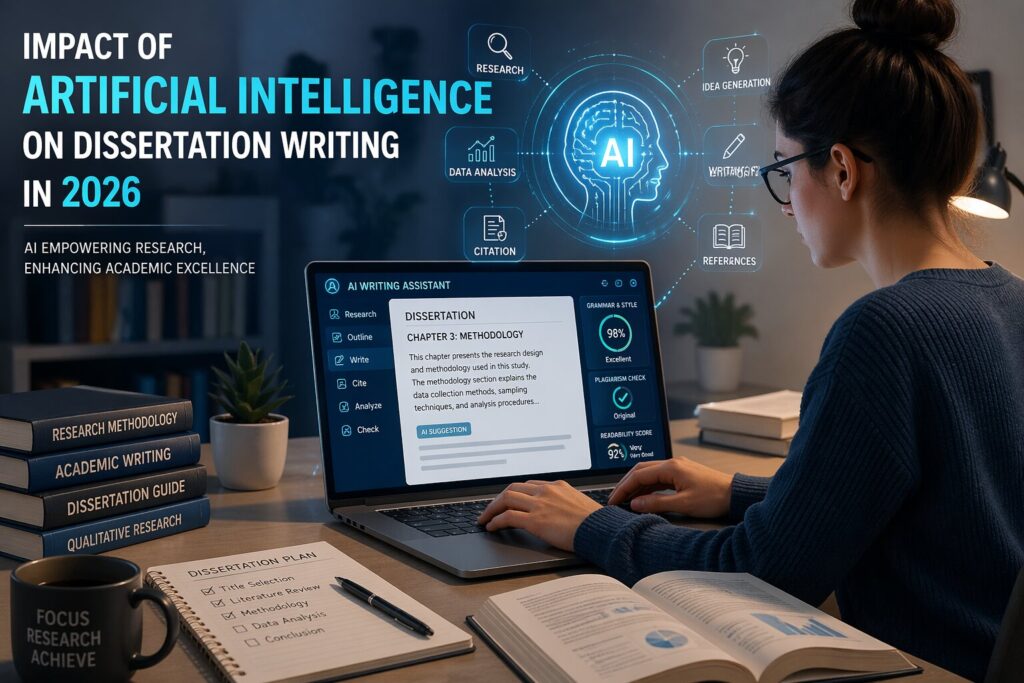
The Impact of Artificial Intelligence on Dissertation Writing in 2026 is one of the most significant transformations in modern education. Artificial Intelligence (AI) has evolved from being a supportive tool to becoming a central component in academic research and writing. In 2026, students are no longer limited to traditional research methods; instead, they are leveraging advanced AI tools to streamline their dissertation process. From topic selection to final proofreading, AI technologies are reshaping how dissertations are conceptualized, structured, and completed. This shift has not only improved efficiency but also introduced new challenges related to ethics, originality, and academic integrity. As universities and institutions adapt to these changes, understanding the role of AI in dissertation writing has become essential for students aiming to succeed in a competitive academic environment. Students also read and search about how to write a dissertation from scratch. How AI is Transforming Dissertation Research AI-Powered Topic Selection and Idea Generation One of the most noticeable aspects of the Impact of Artificial Intelligence on Dissertation Writing in 2026 is its role in helping students generate ideas and choose relevant research topics. AI-driven platforms analyze current academic trends, research gaps, and published papers to suggest unique and viable dissertation topics. This eliminates the time-consuming process of brainstorming and allows students to focus on refining their ideas. Additionally, AI tools can align topics with industry demands, ensuring that dissertations remain practical and career-oriented. This capability is especially beneficial in fields like technology, business, and healthcare, where trends evolve rapidly. This is where professional services like Essay Writing Assignments become invaluable Advanced Literature Review Assistance Conducting a literature review is traditionally one of the most challenging parts of dissertation writing. In 2026, AI tools can scan thousands of academic journals, books, and articles within seconds to extract relevant information. These tools summarize key findings, identify patterns, and even highlight conflicting arguments. As a result, students can develop a comprehensive understanding of their research area without spending months reading and analyzing sources manually. The Impact of Artificial Intelligence on Dissertation Writing in 2026 is clearly evident in how it reduces workload while improving the depth and quality of literature reviews. AI in Writing and Structuring Dissertations Automated Content Generation AI writing assistants have become highly sophisticated, enabling students to draft sections of their dissertations quickly and effectively. These tools can generate coherent paragraphs, suggest transitions, and maintain a consistent academic tone. While AI does not replace human creativity, it significantly enhances productivity by providing a strong starting point for writing. Students can then refine and personalize the content to meet academic standards. The Impact of Artificial Intelligence on Dissertation Writing in 2026 is particularly visible in how it accelerates the writing process without compromising quality. Structuring and Formatting Support Proper structure and formatting are critical components of a successful dissertation. AI tools now offer automated formatting features that adhere to specific academic styles such as APA, MLA, or Harvard. They can organize chapters, create headings, and ensure consistency throughout the document. Furthermore, AI systems can suggest improvements in logical flow and coherence, helping students present their arguments more effectively. This reduces the likelihood of errors and ensures that dissertations meet institutional requirements. For students who need reliable and professional support, Online Essay Writing remains a trusted choice. Ethical Considerations and Academic Integrity Challenges of Plagiarism and Originality Despite its benefits, the Impact of Artificial Intelligence on Dissertation Writing in 2026 raises important ethical concerns. One of the primary issues is plagiarism, as AI-generated content may unintentionally replicate existing work. Universities are increasingly using advanced plagiarism detection tools to identify AI-generated text and ensure originality. Students must therefore use AI responsibly, treating it as a supportive tool rather than a replacement for their own ideas and analysis. Balancing AI Assistance with Human Effort Another ethical challenge is maintaining a balance between AI assistance and independent work. Over-reliance on AI can hinder critical thinking and reduce the authenticity of research. Academic institutions emphasize the importance of originality, encouraging students to use AI as a guide rather than a crutch. The Impact of Artificial Intelligence on Dissertation Writing in 2026 highlights the need for clear guidelines and policies to ensure that AI is used ethically and effectively. Benefits of AI in Dissertation Writing Increased Efficiency and Time Management One of the most significant advantages of AI is its ability to save time. Tasks that once took weeks, such as data analysis and literature reviews, can now be completed in a matter of hours. This allows students to focus on critical aspects of their research, such as analysis and interpretation. The Impact of Artificial Intelligence on Dissertation Writing in 2026 is evident in how it improves productivity and reduces stress among students. Enhanced Quality and Accuracy AI tools can identify grammatical errors, improve sentence structure, and ensure clarity in writing. They also provide suggestions for better word choice and academic tone, resulting in higher-quality dissertations. Additionally, AI-driven data analysis tools offer accurate and reliable results, enhancing the credibility of research findings. This combination of efficiency and quality makes AI an invaluable resource for dissertation writing. Limitations of Artificial Intelligence in Academic Writing Lack of Critical Thinking and Creativity While AI is highly efficient, it lacks the ability to think critically and creatively. It cannot generate original ideas or interpret complex concepts in the same way humans can. Students must therefore rely on their own intellectual abilities to develop unique arguments and insights. The Impact of Artificial Intelligence on Dissertation Writing in 2026 demonstrates that AI should complement, not replace, human intelligence. Dependence on Technology Another limitation is the growing dependence on AI tools. Students who rely too heavily on AI may struggle to develop essential research and writing skills. This dependence can also create challenges in situations where AI tools are not available. Therefore, it is important to strike a balance between using AI and maintaining traditional academic skills. The Future of Dissertation Writing with AI Integration of AI in Academic Institutions As AI continues

